Wagons of the World War
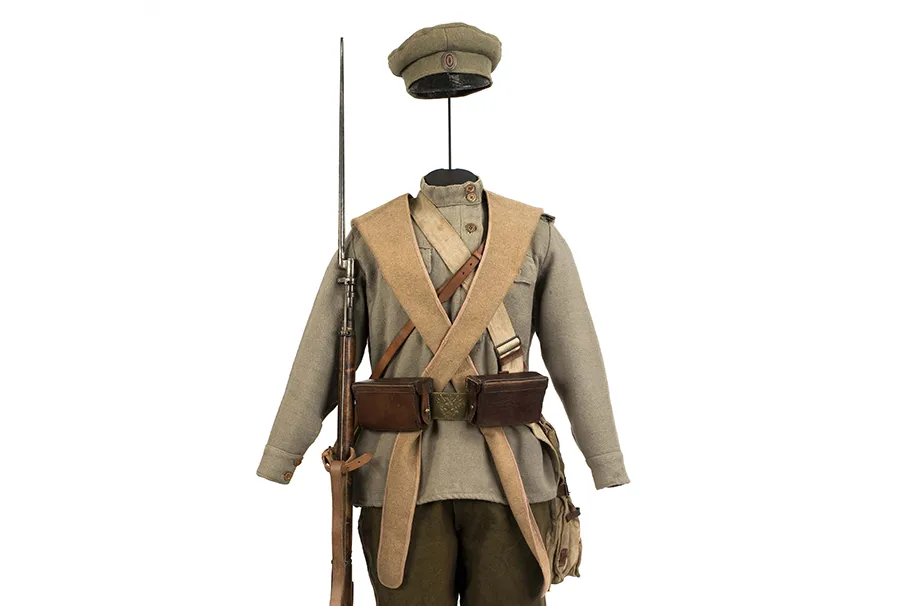
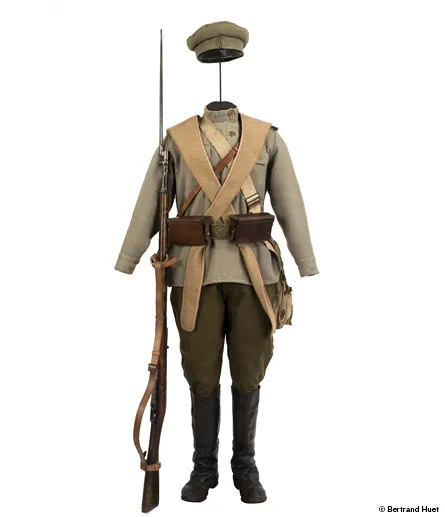
The Russian army adopted a new field uniform in 1907. In a khaki-like colour, it was made up of a soft cap bearing the emblem of the Romanovs, a simple, standing-collared traditional shirt, known as a gymnastyorka, knee trousers and boots.
In winter, Russian soldiers might also wear a bashlyk, a hood with long lappets, which was to be worn, according to regulations, when outside temperatures dropped below -5°C. It was worn so as to cover the head and headgear, and the lappets were tied across the chest.
A leather belt with a brass buckle marked with the two-headed eagle was used to attach two cartridge pouches in brown leather. The equipment was rudimentary: an individual entrenching tool, an aluminium canteen covered in cloth, an individual bowl in copper and a large canvas satchel known as a “kit bag”. The standard infantry rifle was the Mosin-Nagant 1891 with a quadrangular bayonet that generally remained fixed under the weapon.